Silicon Nitride Powder Grades Explained: Key Indicators and Selection Guide for Industrial Applications
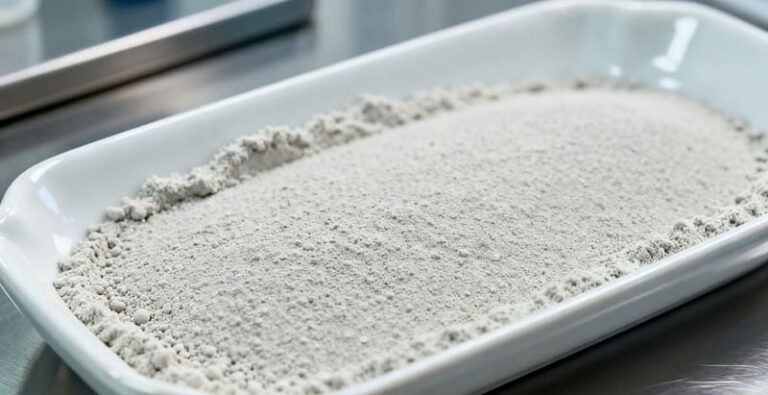
Silicon nitride powder plays a decisive role in modern ceramic engineering, influencing how effectively structural components perform in extreme environments such as high temperatures, mechanical stress, and corrosive atmospheres. While silicon nitride powder may appear similar across suppliers, its grade, purity, phase composition, morphology, and defect control vary dramatically—and these differences directly determine the performance and reliability of the final ceramic. This article explains how silicon nitride powder is classified, what indicators truly matter, and how engineers can make informed selection decisions based on application requirements.
Unter Erweiterte Pulvertechnologie, we specialize in high-quality silicon nitride powder products, ensuring optimal performance for industrial and scientific applications.
What Defines Silicon Nitride Powder and How Are Grades Classified?
Grades of silicon nitride powder are typically determined by purity, particle size, α/β phase composition, morphology, and sintering activity. Before comparing grades, it is important to understand why these indicators matter and how suppliers classify their powders. For engineers and procurement professionals, these parameters serve as the baseline for selecting the correct material for high-performance ceramics.
Key Indicators Used in Silicon Nitride Powder Classification
| Indicator | Beschreibung | Why It Matters |
| Reinheit | Non-Si, non-N impurities | Determines ceramic quality and high-temp reliability |
| Particle size | D10, D50, D90 metrics | Controls sintering behavior and density |
| Phase composition | α-Si3N4 %, β-Si3N4 % | Governs final microstructure |
| Morphologie | Shape, agglomeration | Influences processing and flow |
| Oxygen content | Surface oxidation | Affects glassy phase formation |
Understanding these classification principles helps establish the foundation for selecting the most suitable silicon nitride powder for industrial applications.
Explore our high-quality ceramic powder products.
What Are the Purity Grades of Silicon Nitride Powder and How Do They Influence Performance?
Purity is one of the most critical parameters because metallic impurities, oxygen, and carbon directly affect the sintering process and the ceramic’s high-temperature stability. High-purity powders are beneficial for advanced applications that require electrical insulation, high hardness, and thermal shock resistance.
Comparison of Silicon Nitride Powder Purity Grades
| Klasse | Purity Level | Typical Impurity Limits | Gemeinsame Anwendungen |
| High Purity (3N–4N) | ≥99.9–99.99% | Metal impurities: ppm–ppb; Oxygen: <1% | Semiconductors, bearings, optics |
| Industrial Grade | 98–99.5% | Higher impurity tolerance | Wear parts, refractories, and general ceramics |
| Standard Grade | <98% | Not tightly controlled | Low-end refractories, fillers |
By understanding purity differences, engineers can make rational decisions—whether prioritizing performance or cost.
How Do Particle Size and Size Distribution Affect Silicon Nitride Powder Selection?
Particle size determines sintering activity, densification behavior, and final ceramic microstructure. A narrow distribution improves consistency, while a controlled bimodal distribution improves packing density. Understanding these metrics is crucial for selecting powders that are optimized for advanced manufacturing.
Typical Particle Size Grades for Silicon Nitride Powder
| Kategorie | D50 Range | Features | Suitable Applications |
| Ultrafine | <1 μm | High activity, narrow distribution | High-performance ceramics, electronic substrates |
| Fine | 1–3 μm | Balance of cost and performance | General structural ceramics |
| Medium/Coarse | >3 μm | Low activity, low cost | Refractories, abrasives, composites |
Choosing the right size range ensures the desired balance between densification, strength, and manufacturing efficiency.
Request a custom quote for our silicon nitride powder products.
Why Does alpha/Beta Phase Composition Matter for Silicon Nitride Powder Grades?
The α-to-β ratio affects microstructure evolution during sintering and determines fracture toughness, creep behavior, and thermal conductivity. High-α powders produce elongated β grains, while high-β powders provide stability and high-temperature performance.
How Alpha/Beta Phase Composition Influences Ceramic Properties
High α-phase (>90%):
- Promotes α→β transformation
- Produces elongated interlocking β grains
- Enhances toughness and fracture resistance
High β-phase (>90%):
- Stable at high temperatures
- Often higher thermal conductivity
- Useful for heat dissipation applications
Mixed-phase powders:
- Balanced performance and cost
- Suitable for general ceramic parts
This phase control is central to designing ceramics with targeted mechanical or thermal performance.
How Does Powder Morphology Influence Handling, Flowability, and Sintering?
Silicon nitride powders come in spherical, equiaxed, or irregular shapes. Morphology influences flow behavior, packing density, and consistency during forming processes such as injection molding, tape casting, or additive manufacturing.
Typical Morphology Types and Their Applications
- Spherical or quasi-spherical: best flowability for injection molding or 3D printing
- Equiaxed fine particles: balanced flow and high sintering activity
- Irregular particles: highest activity but difficult flow, used in structural ceramics
- Low agglomeration powders: essential for high-density parts and reliable sintering
By choosing proper morphology, manufacturers reduce defects, improve shaping performance, and enhance the reliability of final ceramics.
Why Is Sintering Activity a Key Indicator in Grade Selection for Silicon Nitride Powder?
Sintering activity determines the ease of densification and the final microstructure. High activity reduces firing temperature, allows lower additive usage, and improves mechanical performance. Activity depends on surface area, purity, morphology, and phase.
Sintering Activity Indicators
| Indicator | Higher Value Means | Industrial Importance |
| Specific surface area (SSA) | Finer powder, higher activity | Drives densification |
| Oxygen content | More surface oxidation | Influences glassy phase formation |
| Agglomeration | Poor flow, uneven shrinkage | Reduces reliability |
| α-phase content | Higher transformation activity | Improves toughness |
Understanding sintering behavior is essential for ensuring strong, reliable silicon nitride ceramics.
How Should Engineers Match Silicon Nitride Powder Grades to Industrial Applications?
Different applications demand different balances of purity, particle size, phase composition, and cost. A precise match ensures optimal mechanical strength, thermal properties, and manufacturing efficiency.
Typical Powder Grade Selection Guide
| Anmeldung | Recommended Grade | Key Indicators | Reason |
| High-end bearings | High α-phase, ultrafine, 3N purity | D50 <1 μm, O <1% | High toughness and fatigue resistance |
| Semiconductor parts | 4N purity, controlled morphology | ppb metal impurities | Electrical insulation and extreme cleanliness |
| Wear components | Industrial grade, fine powder | 1–3 μm | Cost-effective performance |
| Refractories | Coarse powder, high β-phase | D50 >3 μm | Thermal stability and low cost |
| Spritzgießen | Spherical, low agglomeration | Consistent flow | Process stability |
Using a structured selection approach helps avoid over-specification or performance failures.
What Should Buyers Consider When Evaluating Supplier Specifications for Silicon Nitride Powder?
Different suppliers use different grade labels such as “HP,” “S,” “Grade A,” or “α95.” Because there is no global standard, buyers must rely on technical data sheets rather than naming conventions.
Essential Parameters to Confirm on a Spec Sheet
- Purity and metallic impurity levels
- Phase composition (α %)
- D10/D50/D90 particle size values
- Oxygen and carbon content
- SSA (specific surface area)
- Morphology and agglomeration level
- Trace element analysis (Fe, Ca, Al, Na)
Proper verification ensures the selected powder meets both performance and production requirements.
FQA
| Frage | Antwort |
| Is higher purity always better? | Not necessarily—some industrial applications do not justify the cost of 3N–4N grades. |
| Why is α-phase important? | It drives the α→β transformation that enhances toughness during sintering. |
| Does finer powder always improve strength? | Only if oxygen and agglomeration are controlled; otherwise, defects increase. |
| How do I check if the powder is agglomerated? | SEM images and tap density measurements provide reliable indications. |
| Are supplier-grade names standardized? | No. Always rely on technical specifications, not naming labels. |
This FAQ section helps clarify common misconceptions and supports informed purchasing decisions.
Schlussfolgerung
Silicon nitride powder is far from uniform—its grade determines how effectively it can support industrial applications ranging from semiconductor components to structural ceramics and refractories. Understanding purity, particle size, phase composition, morphology, and sintering activity allows engineers and manufacturers to select the right material for their performance and cost requirements. By relying on well-defined indicators rather than supplier naming conventions, buyers can optimize reliability and ensure consistent ceramic manufacturing outcomes.
Looking for high-quality ceramic powder products? Kontaktieren Sie uns noch heute!