What Silicon Nitride Powder Indicators Most Influence the Thermal Conductivity of Finished Components?
Thermal conductivity is one of the most important performance metrics for silicon nitride ceramic components used in heat spreaders, heater substrates, semiconductor fixtures, and high-load industrial parts. While sintering conditions and post-processing contribute to final performance, the most decisive factors originate from the intrinsic indicators of Silicon Nitride Powder itself. Particle purity, morphology, α/β phase composition, oxygen content, defect density, and surface chemistry determine how efficiently phonons transfer through the final ceramic network.
Understanding how each powder indicator influences microstructure evolution—crystallization, grain growth, densification, and glassy-phase formation—is essential for designing ceramics that reach 120–180 W/(m·K) or higher thermal conductivity. This article breaks down the critical powder characteristics that govern heat transfer and explains their mechanisms through phonon physics, grain-boundary interactions, and densification behavior.
Unter Erweiterte Pulvertechnologie, we specialize in high-quality silicon nitride powder products, ensuring optimal performance for industrial and scientific applications.
What Is Silicon Nitride Powder and How Does It Determine Ceramic Heat-Transfer Behavior?
Before analyzing specific properties, it is essential to understand how Silicon Nitride Powder serves as the building block for all structural and thermophysical outcomes. Silicon nitride transfers heat mainly through phonons rather than electrons, meaning any factor that disrupts the periodicity of its lattice will significantly reduce thermal conductivity. Powder indicators directly shape these lattice conditions after sintering.
Key Roles of Silicon Nitride Powder in Thermal Transport
- Acts as the source of β-Si3N4 grains that define phonon transport pathways
- Determines defect density and impurity concentration in the final ceramic matrix
- Influences the amount of glassy boundary phase formed during sintering
- Controls the evolution of grain size and morphology during densification
These combined effects define whether phonons travel smoothly across the microstructure or scatter at every boundary. When powder characteristics promote a defect-free, coarse-grained, and low-oxygen microstructure, heat transfer improves dramatically.
Explore our high-quality ceramic powder products.
How Does the Alpha/βeta Phase Ratio of Silicon Nitride Powder Affect Thermal Conductivity?
The α-to-β phase ratio is one of the core identifiers of Silicon Nitride Powder quality. Since β-Si3N4 has higher intrinsic thermal conductivity due to its chain-like crystal structure, powders with higher β content generally produce better heat-transfer performance after sintering.
Influence of α/β Ratio on Final Ceramic Properties
| α/β Ratio of Powder | Expected Microstructure After Sintering | Impact on Thermal Conductivity |
| High α (≥90%) | Fast transformation, finer grains | Lower to medium |
| Balanced (50:50) | Controlled grain growth | Mäßig |
| High β (≥70%) | Coarse elongated β grains | Hoch |
Powders rich in β-Si3N4 allow stable, elongated grains to form, which create continuous pathways for phonon transport. High-α powders can still achieve good thermal conductivity, but only when sintering conditions promote full transformation and sufficient grain coarsening.
Why Does Oxygen Content in Silicon Nitride Powder Influence Thermal Conductivity?
Oxygen impurities originate from natural oxidation of Silicon Nitride Powder surfaces, forming SiO2 layers that later convert into low-conductivity glassy phases during sintering. These amorphous phases significantly disrupt phonon transmission.
Effects of Oxygen Levels on Thermal Behavior
- Increased glass-phase formation at grain boundaries
- Higher phonon scattering and weaker lattice connectivity
- Reduced density due to inhibited grain coalescence
- Lower bulk thermal conductivity, especially at >1 wt% oxygen
Even small oxygen increases can drop thermal conductivity by 10–20 W/(m·K). Therefore, powder producers carefully minimize oxidation using inert atmosphere milling, coating control, and optimized storage.
How Do Particle Size and Distribution of Silicon Nitride Powder Affect Thermal Transport?
The particle size distribution controls how efficiently the ceramics densify. A balanced distribution allows tight packing, reduces sintering shrinkage gradients, and minimizes residual porosity—one of the strongest thermal-conductivity killers.
Particle Size Effects on Microstructure
| Average Particle Size | Densification Behavior | Effect on Thermal Conductivity |
| Fine (<0.5 µm) | Rapid densification but high pore trapping | Mittel |
| Medium (0.5–1.0 µm) | Uniform densification, fewer defects | Hoch |
| Coarse (>1.5 µm) | Slow densification, higher closed porosity | Niedrig |
An optimized bimodal distribution helps achieve full densification while enabling controlled grain growth, which ultimately benefits thermal performance.
How Does the Powder Purity of Silicon Nitride Powder Control Heat Conduction Pathways?
Powder purity determines the presence of metallic, oxygen-rich, or carbon-based impurities, which can introduce additional phonon-scattering centers and disrupt the ceramic’s long-range atomic order.
Key Purity-Related Influences
- Metallic impurities create strong phonon scattering points
- Free carbon residues inhibit phase transformation and densification
- Oxide contaminants increase glass-phase content
- High-purity (>99.9%) powders enable long, continuous β-grain networks
High-purity Silicon Nitride Powder consistently achieves higher thermal performance because the phonon pathway remains unobstructed, allowing energy to flow with minimal resistance.
Which Powder Morphology Features Most Affect Thermal Conductivity in Silicon Nitride Ceramics?
Morphology includes the shape, aspect ratio, and surface texture of powder particles. These characteristics influence particle packing, grain-growth behavior, and microstructural uniformity.
Morphology Types and Their Effects
| Morphologie des Pulvers | Packing Behavior | Resulting Thermal Performance |
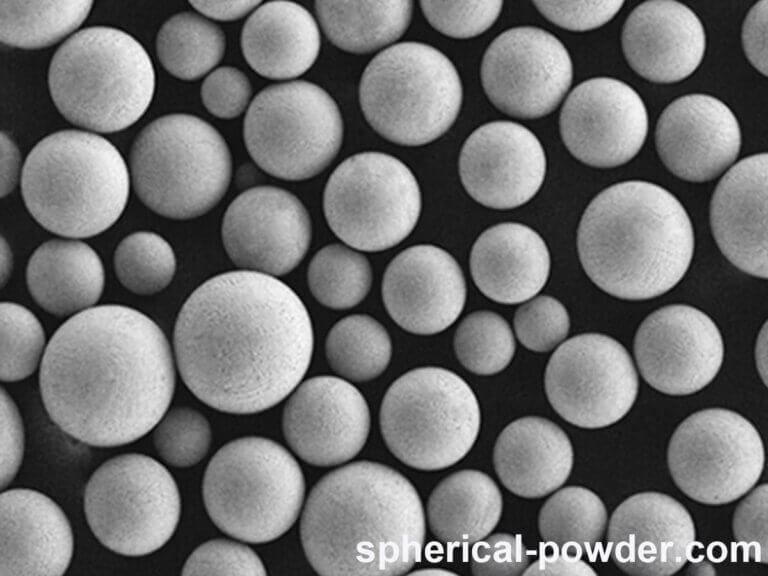
| Near-spherical | Excellent packing, fewer pores | Hoch |
| Irregular/angular | Poorer packing, high pore retention | Medium to low |
| Rod-like β nuclei | Promote elongated β grains | Sehr hoch |
The best thermal conductivity is achieved when powder morphology supports uniform densification and produces clean, elongated β-Si3N4 grains.
How Do Sintering Additives in Silicon Nitride Powder Influence Heat Transfer?
Additives such as Y2O3 and Al2O3 are essential for densification, but they also form secondary glassy phases that reduce thermal conductivity if present in excess.
Roles of Common Sintering Additives
- Y2O3: forms strong grain-boundary glass networks
- Al2O3: improves liquid-phase sintering efficiency
- MgO: reduces sintering temperature and glass viscosity
- Rare-earth oxides: enhance crystallization and toughness
While additives enable full densification, manufacturers must balance them carefully to minimize amorphous phase accumulation at grain boundaries.
How Do Powder Surface Area and Specific Surface Chemistry Affect Thermal Conductivity?
High surface area improves reactivity but increases the amount of absorbed oxygen and contaminants. Surface chemistry also affects how powders disperse and sinter.
Surface Area Influence
| BET Surface Area | Sintering Activity | Impact on Thermal Conductivity |
| Low (<5 m²/g) | Slow, coarse grains | High potential |
| Moderate (5–10 m²/g) | Balanced reactivity | Hoch |
| Very high (>15 m²/g) | Excess glass-phase formation | Reduced |
Surface area should match the sintering profile to promote grain growth without triggering excessive oxidation or impurity uptake.
Why Is Crystallinity Level Important for Heat Conduction in Silicon Nitride Components?
Crystallinity describes the degree of ordered atomic arrangement in the powder. Higher crystallinity reduces phonon scattering and provides higher intrinsic conductivity.
Effects of Crystallinity
- Increased long-range atomic order
- Lower point-defect density
- Improved grain-growth consistency
- Higher phonon mean-free path
Powders with high crystallinity formats allow the final ceramic to approach theoretical heat-transfer limits.
How Do Powder-Induced Defects Limit Thermal Conductivity in Silicon Nitride Ceramics?
Defects such as vacancies, stacking faults, and dislocations disrupt the phonon flow inside silicon nitride.
Defect Types and Effects
| Defect Type | Origin in Powder | Impact |
| Vacancies | High-energy milling | Medium thermal reduction |
| Dislocations | Poor powder crystallization | High thermal reduction |
| Oxygen substitution | Surface oxidation | Severe thermal loss |
Minimizing defects through controlled powder synthesis and handling is essential to reach high-conductivity silicon nitride ceramics.
How Does Powder-Induced Grain Growth Behavior Control Heat Transfer Efficiency?
Powder characteristics determine whether grains grow coarse and elongated or remain fine and equiaxed.
Grain-Growth Influences
- α-phase transformation rate
- Additive distribution
- Impurity concentration
- Particle-packing uniformity
Coarse elongated β-grains create continuous heat conduction pathways with minimal scattering events.
How Do Residual Pores Originating From Powder Packing Affect Thermal Conductivity?
Residual pores are among the strongest thermal-conductivity killers. Their presence often originates from powder packing deficiencies before sintering.
Pore Types and Their Thermal Impact
| Pore Type | Origin | Effect on Thermal Conductivity |
| Closed pores | Incomplete densification | Severe reduction |
| Open pores | Surface irregularities | Medium reduction |
| Intergranular pores | Poor packing | High reduction |
Reducing pore formation requires powders with optimized shape, size distribution, and surface chemistry to promote uniform densification.
How Do Processing Sensitivities of Silicon Nitride Powder Influence Thermal Performance?
Silicon Nitride Powder is highly sensitive to milling, mixing, and handling environments. These steps can introduce contamination, particle damage, or surface oxidation.
Processing Factors Affecting Thermal Conductivity
- Milling media contamination
- Oxygen absorption during mixing
- Powder agglomeration
- Non-uniform additive dispersion
Controlled processing ensures that powder indicators translate into a clean, well-connected ceramic microstructure.
How Does Silicon Nitride Powder Selection Influence Thermal Conductivity Compared With Other Ceramic Powders?
Silicon nitride’s phonon-based heat conduction behaves differently from alumina, zirconia, and silicon carbide. Powder selection directly defines these distinctions.
Comparison of Powders for Thermal Conductivity
| Ceramic Powder | Typical Thermal Conductivity | Powder Sensitivity |
| Silicon nitride | 80–180 W/(m·K) | Hoch |
| Alumina | 25–35 W/(m·K) | Mittel |
| Zirconia | 2–3 W/(m·K) | Niedrig |
| SiC | 120–200 W/(m·K) | Mittel |
Silicon nitride offers a unique balance of toughness and thermal performance, but only when powder indicators are optimized.
Request a custom quote for our silicon nitride powder products.
FAQ
| Frage | Antwort |
| How does oxygen content affect thermal conductivity? | Higher oxygen increases glass-phase formation and reduces conductivity significantly. |
| Does particle size matter? | Yes — optimal 0.5–1 µm powder achieves the highest densification and thermal performance. |
| Why is high β-phase content good for heat transfer? | β-Si3N4 forms long, continuous grains that allow phonons to travel more smoothly. |
| Are sintering additives necessary? | Yes, but excessive additives reduce thermal conductivity by increasing amorphous phases. |
| How important is powder purity? | Extremely — impurities cause severe phonon scattering and lower conductivity. |
Schlussfolgerung
Silicon Nitride Powder is the foundational factor that determines the thermal conductivity of sintered silicon nitride components. From α/β phase ratio and oxygen content to particle size, purity, and morphology, each indicator influences phonon behavior, microstructure evolution, and grain-boundary characteristics. When powders are optimized to promote coarse, elongated β-grains, low glass-phase content, minimal defects, and high densification, the resulting ceramics achieve exceptional heat-transfer performance suitable for advanced thermal management applications.
Looking for high-quality silicon nitride powder products? Kontaktieren Sie uns noch heute!