Why Spray-Dried Granules Develop Defects: Mechanisms, Root Causes, and Solutions
Spray drying plays a decisive role in producing ceramic granules with controlled flowability, packing behaviour, and compaction performance. The quality of spray-dried granules directly affects die-filling uniformity, green density distribution, and the microstructure of the final sintered ceramic body. However, despite stable equipment and mature processing routes, defects still occur due to the complex interactions between slurry properties, droplet formation, heat transfer, and drying kinetics. Understanding the mechanisms behind each defect allows manufacturers to diagnose issues more accurately and achieve consistent granule performance.
This article examines why spray-dried granules develop characteristic defects, how processing parameters trigger them, and what adjustments effectively reduce defect frequency. Each section uses scientific reasoning, data-driven explanations, and structured lists or tables to provide actionable insight for ceramic manufacturing engineers.
At Advanced Powder Tech, we specialize in high-quality powder products, ensuring optimal performance for industrial and scientific applications.
What Defines Spray-Dried Granules and Why Do Their Properties Matter?
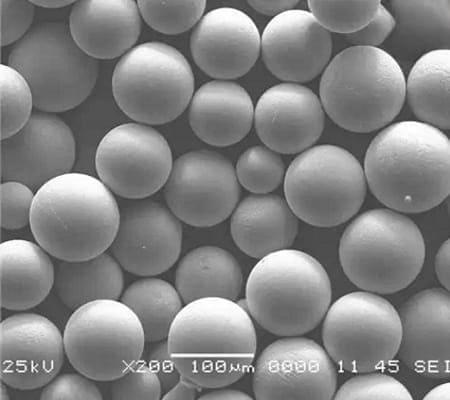
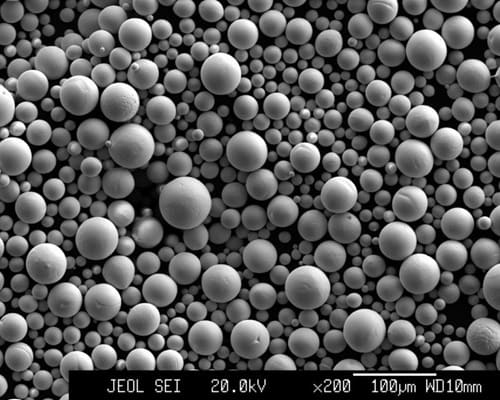
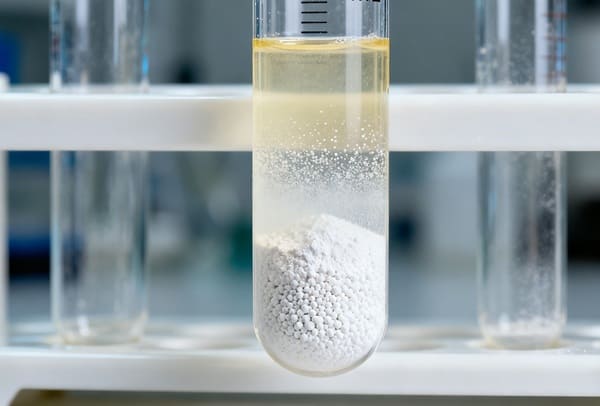
The structure and morphology of spray-dried granules depend on the drying behavior of atomized droplets. Each droplet undergoes rapid evaporation, binder redistribution, and densification. These transformations determine surface texture, internal porosity, and mechanical response during pressing. Because granules directly control die-filling and compaction, any irregularity—such as uneven moisture or density—propagates into green defects and later sintering inconsistencies.
Key Physical Attributes of Spray-Dried Granules
| Attribute | Technical Meaning | Effect on Ceramic Forming |
| Particle size distribution | Spread of granule diameters | Determines flowability & packing uniformity |
| Residual moisture | Water remaining after drying | Influences binder activation during pressing |
| Internal density | Solid, hollow, or shell-type structures | Determines compaction response & pore formation |
| Surface morphology | Smooth, porous, wrinkled | Determines friction during die filling |
Stable granule properties reduce segregation, improve die-filling efficiency, and create a predictable density distribution during pressing.
Explore our high-quality powder products.
Why Do Spray-Dried Granules Become Hollow or Shell-Like?
Hollow granules form when the droplet surface dries faster than moisture can diffuse from the interior. This creates a rigid shell while the core remains fluid. If evaporation continues while the core collapses inward, the granule becomes hollow or partially hollow. Ceramic granules with these structures show reduced green strength and non-uniform compaction, causing density gradients in pressed bodies.
Mechanisms Producing Hollow or Shell-Type Granules
- High inlet temperature causes immediate outer-layer solidification
- Small droplet size that accelerates surface evaporation
- Low slurry viscosity reduces mass-transfer resistance
- Strong binder migration toward the droplet surface
- Rapid formation of a glassy or polymeric skin on the droplet exterior
Hollow granules are sometimes intentional in other industries but problematic in ceramics, where uniform densification is essential.
Which Processing Parameters Most Strongly Trigger Defects in Spray-Dried Granules?
Spray drying is highly sensitive to equipment conditions and feed characteristics. Any variation in temperature, airflow, atomization, or slurry rheology directly modifies moisture removal rates and binder mobility. Inconsistent control over these variables produces defects such as cracks, hollowness, agglomeration, and density variation.
Parameters that Significantly Affect Granule Defect Formation
- Slurry viscosity: Too high → wet granules; too low → hollow granules
- Solid loading: Low solids → weak granules; high solids → uneven drying
- Inlet/outlet temperature: High T → shell hardening; low T → wet cores
- Feed rate: Too high → incomplete drying; too low → overheated droplets
- Drying air humidity: High humidity slows evaporation and increases sticking
Stable control of each parameter minimizes the thermal and mass-transfer imbalances that generate structural defects.
How Do Binder Type and Concentration Influence Defects in Spray-Dried Granules?
Binders strengthen granules but can also create issues if their distribution is uneven. As moisture evaporates, binder molecules migrate within the droplet. If the migration rate is too high, the binder accumulates on the surface, forming a rigid shell or causing cracks after cooling. Binder chemistry—such as softening point and solubility—also affects granule strength and internal structure.
Binder-Related Defect Mechanisms
| Binder Condition | Defect | Technical Cause |
| Excess binder | Hard shell or brittle surface | Binder concentrates on the droplet exterior |
| Low binder content | Fragmented granules | Weak interparticle bonding |
| Slow binder dissolution | Uneven internal structure | Non-uniform polymer distribution |
| Temperature-sensitive binder | Collapsed granules | Softening during late-stage drying |
Proper binder concentration ensures structural cohesion without encouraging surface hardening or internal densification imbalances.
Why Do Spray-Dried Granules Develop Surface Cracking or Wrinkling?
Surface cracking occurs when the internal region contracts at a different rate from the exterior. If the outer layer becomes rigid at low moisture levels while the interior continues to shrink, tensile stresses form and produce small cracks. Wrinkling results from similar stress gradients but is usually caused by uneven cooling or partial collapse of weak shells.
Primary Factors Causing Surface Cracking or Wrinkling
- Excessive outlet temperature leading to brittle outer layers
- Poor binder distribution is reducing surface elasticity
- Large droplets with slow internal moisture diffusion
- Uneven cooling after leaving the drying chamber
- Rapid moisture release through a rigid shell
Cracked granules compact inconsistently and may contribute to delamination or laminate defects in pressed bodies.
How Does Agglomeration Occur During Spray Drying and Why Is It Harmful?
Agglomeration happens when partially dried granules collide while their surfaces are still sticky. This creates oversized, irregular clusters that degrade flowability and cause die-filling defects. Agglomeration is influenced by residence time, droplet stickiness, humidity, and separation efficiency.
Agglomeration Mechanisms
| Condition | Cause | Result |
| High outlet moisture | Slow drying | Sticky surfaces attract other granules |
| Excess slurry feed rate | Overloading the chamber | Incomplete surface drying |
| Insufficient cyclone separation | Re-entrainment of fines | Overgrowth on larger granules |
| Excess binder | Prolonged tackiness | Cluster formation |
Agglomerated granules increase variability in packing density, reduce flow uniformity, and produce inconsistent green strength.
How Does Atomization Quality Influence Defect Formation in Spray-Dried Granules?
Atomization determines droplet size distribution, which directly affects drying rate, internal porosity, and granule uniformity. Poor atomization produces droplets that dry inconsistently. Oversized droplets remain wet internally, while extremely fine droplets dry too quickly and form hollow structures. Stable atomization is therefore essential for predictable granule morphology.
Defects Caused by Poor Atomization
- Wide particle size distribution, increasing segregation
- Excessive fines, leading to powder dusting and poor flow
- Large droplets with wet cores and wrinkled surfaces
- Irregular droplet trajectories producing deformed granules
- Localized hollowness due to overly small droplets
Atomization stability governs the entire downstream drying pathway, making it one of the most critical variables in spray drying.
What Solutions Can Effectively Reduce Defects in Spray-Dried Granules?
Reducing defects requires coordinated adjustments to thermal conditions, slurry formulation, airflow pattern, and atomization. Data-supported optimization—rather than isolated parameter testing—ensures long-term stability. Effective strategies target moisture balance, binder distribution, and droplet uniformity.
Highly Effective Methods for Minimizing Granule Defects
- Adjust slurry viscosity through solid loading and dispersant level
- Use moderate inlet temperatures to prevent outer-layer scorching
- Control the atomization pressure to narrow the droplet size distribution
- Optimize binder concentration for balanced cohesion and mobility
- Improve airflow stability to avoid uneven drying zones
- Reduce outlet humidity to prevent sticking and agglomeration
Consistent monitoring of moisture profile and granule morphology allows early detection of deviations and prevents large-scale batch defects.
Request a custom quote for our powder products.
FAQ
| Question | Most Likely Technical Cause |
| Why are granules hollow? | Rapid surface drying at high inlet temperatures |
| Why do granules crack? | Stress buildup from unequal shrinkage |
| Why do granules agglomerate? | Excess outlet moisture causing sticky surfaces |
| Why is granule size inconsistent? | Unstable atomization pressure or nozzle wear |
| Why does binder accumulate at the surface? | High evaporation rate driving outward migration |
Conclusion
Spray-dried granule defects arise from interdependent processes involving slurry rheology, thermal gradients, binder mobility, droplet formation, and mass transfer. By understanding the mechanisms behind hollowness, cracking, agglomeration, and uneven density, ceramic manufacturers can adjust atomization conditions, drying parameters, and binder levels with greater precision. The result is improved granule consistency, smoother die filling, stronger green bodies, and more controlled sintering behaviour. Continuous monitoring and systematic parameter tuning remain essential for achieving stable production of high-quality spray-dried granules.
Looking for a high-quality powder product? Contact us today!